
India's Cashless Surge: How a Decade of Digital Payments Rewired the Everyday Economy
A vegetable seller in Indore and a billion-dollar bank now share the same rails. The quiet story of how digital payments became India's most successful public infrastructure.
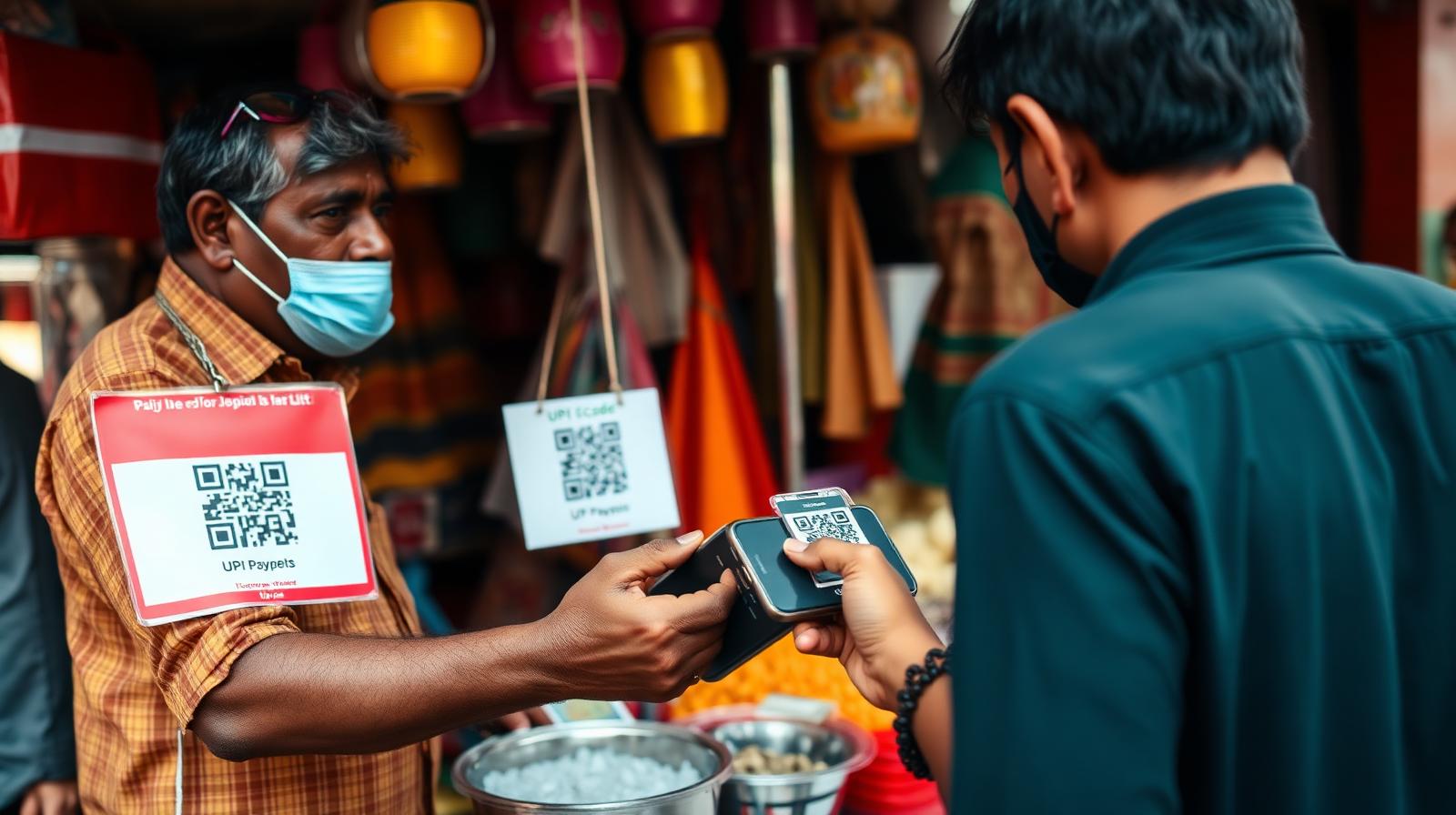
INDORE — At a crowded corner of Sarafa Bazaar, Sunita Patidar sells coriander, tomatoes and green chillies from a cart she has pushed to the same spot for nineteen years. What has changed is not the vegetables but the small printed code taped to her weighing scale. "Earlier I lost half an hour every evening counting coins," she says. "Now the phone makes a sound, and I know the money has come."
That sound — the chime of a successful payment — has become one of the most familiar noises in Indian public life. In a single decade, India has moved from an economy where cash was king to one where even the smallest transaction can travel instantly between a street vendor's phone and a customer's bank account. The shift did not happen because of one dramatic announcement. It happened because a piece of plumbing was built well, made free to use, and then left alone to grow.
The numbers are staggering, but they hide a more human story. Digital payments did not merely make life convenient for the urban middle class; they handed small traders something they had never reliably had before — a record. A seller who accepts money digitally builds, almost by accident, a history of earnings that can become the basis for a small loan, a credit line, a way out of the informal economy's permanent uncertainty.
Not everything has gone smoothly. Network failures still leave shopkeepers stranded mid-sale. Older customers, especially in smaller towns, remain wary, and fraudsters have followed the money with the speed they always do. For every story of empowerment there is a quieter one of a pensioner tricked into approving a payment they did not understand. The infrastructure is brilliant; the literacy around it is still catching up.
What makes the Indian experience unusual is who built the rails. The core system was designed as public infrastructure rather than a private product, and it was deliberately kept free at the point of use. Banks and technology companies compete fiercely on the apps that sit on top, but the road underneath belongs, in spirit, to everyone. Economists abroad now study the model the way an earlier generation studied highways and railways.
Back in Indore, Sunita Patidar is not thinking about any of this. She is wrapping coriander in newspaper and waiting for the chime. When it comes, she nods, and reaches for the next customer. The revolution, it turns out, sounds a lot like an ordinary evening at the market.