
From Maidan to Main Stage: The Small-Town Engine Powering Indian Cricket's Next Generation
The most exciting players in Indian cricket increasingly arrive not from the big metros but from its bus-stand towns. What changed, and what it costs the boys who do not make it.
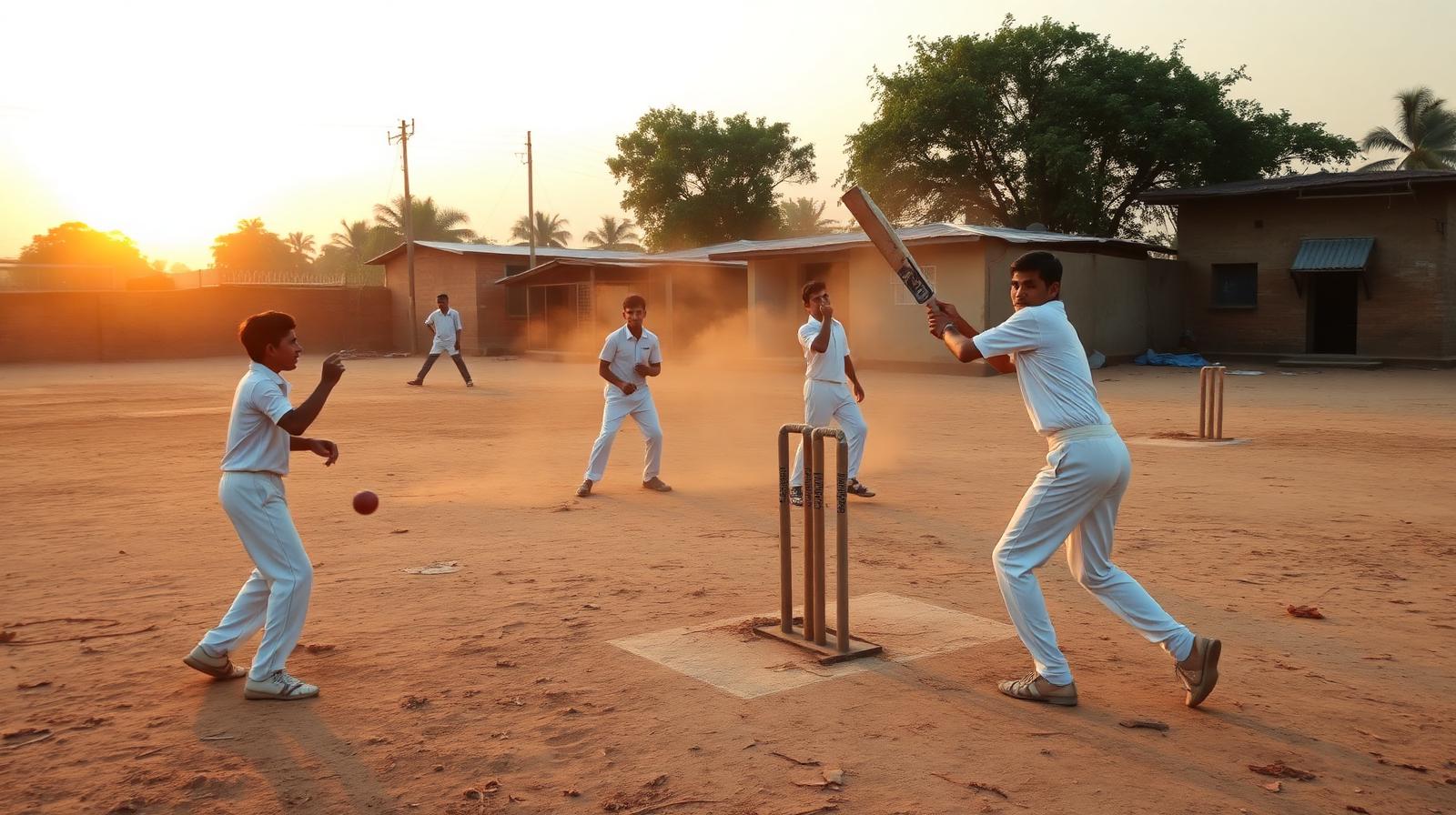
RANCHI — The floodlights at the district stadium do not all work, and the outfield turns to mud after rain. None of that matters to the forty boys who arrive before sunrise, pads slung over shoulders, to bowl at a single net until their arms ache. Somewhere in a town exactly like this one, the next player to wear India's colours is almost certainly waking up right now.
For most of its history, Indian cricket was a game of the big cities and the old clubs — a pipeline that ran through a handful of metros and rewarded those who could afford its coaching and its connections. That pipeline has not disappeared, but it has been overwhelmed. The centre of gravity has shifted decisively toward the small town, the unfashionable district, the place you cannot find on most maps.
Several things made it possible. Television, and then the phone, put world-class technique in front of a boy in a village who had never seen a Test match live. Domestic leagues created a ladder that did not require a famous surname. And a generation of unheralded local coaches — often former players whose own careers stalled one rung short — began producing talent with a hunger that the comfortable rarely possess.
The hunger is the thing everyone mentions. A young cricketer from a town with few other ladders out treats the game not as a hobby but as the entire bet of his family's future. He has watched a parent borrow for his kit. He carries the weight of people who will never see him play. That pressure breaks many and forges a few, and the few who survive it arrive at the top with a temperament the privileged struggle to fake.
It would be dishonest to romanticise it. For every boy who makes it, hundreds give the best years of their youth to a dream that quietly ends in their early twenties, with no degree and no fallback. The system harvests their hope efficiently and discards them without ceremony. The triumph of small-town cricket is also, for most of its participants, a story of loss — and the country has not yet built the soft landing those boys deserve.
Still, at dawn in Ranchi, none of that is on the boys' minds. A coach claps twice, the line shuffles forward, and the next delivery climbs into the grey morning. They are not thinking about the odds. They are thinking about the ball. And that, in the end, is why so many of them come from places like this.